
Listening for the Light

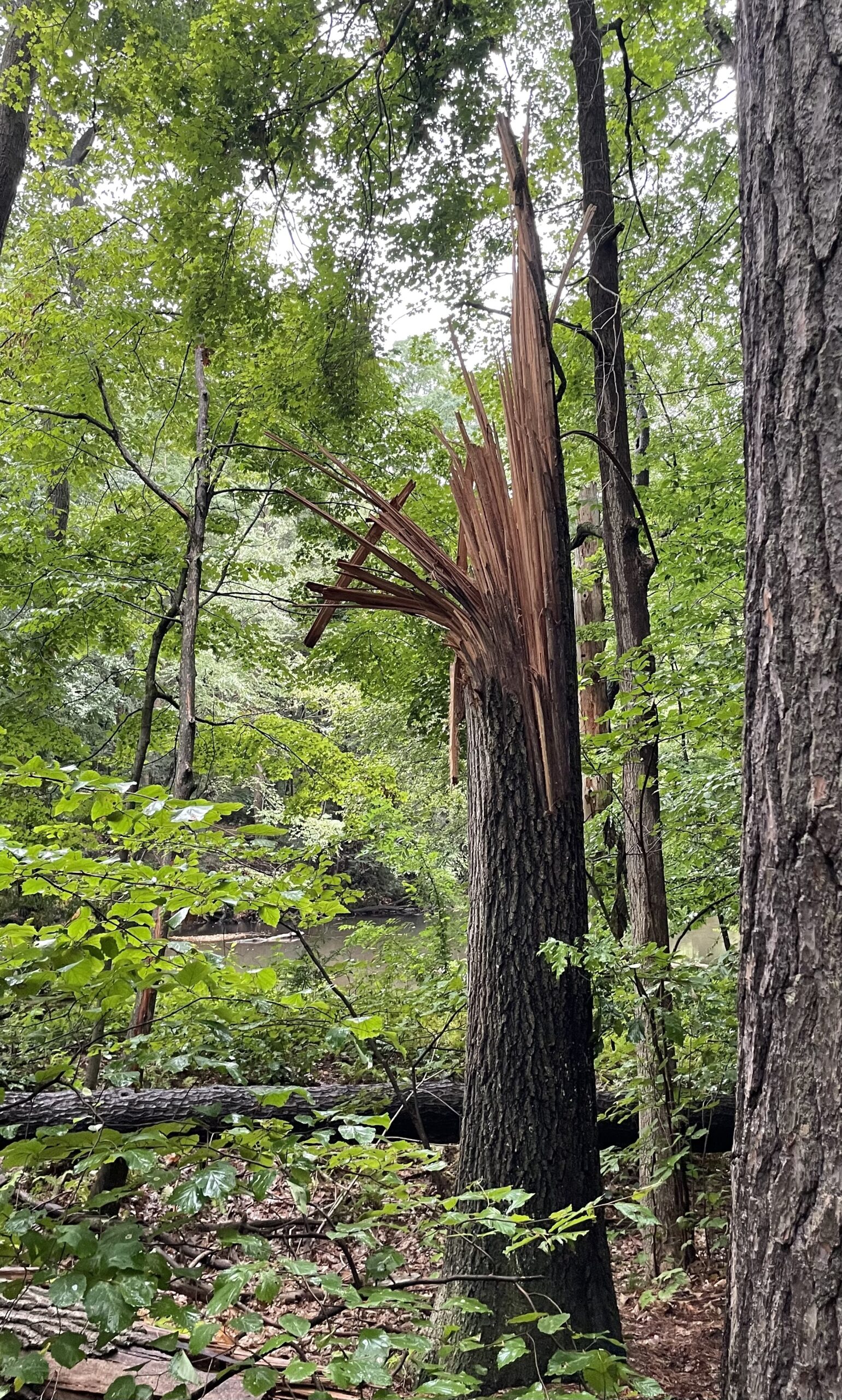
The other night the wind bellowed through the high pines, tearing through, and cracking branches, scattering them across the ground like sentence fragments. It howled in a song of pressure, tumult, and global currents. The white pines thrashed, and the black birches jittered; the wind shook them to their roots.

Last week my ninety-two-year-old uncle talked about caring for his wife in her dementia before she died. He spoke of watching her pain and her anger at him when he tried to help, and his grief because she no longer knew who he was. His voice, no longer sturdy, held every moment of her confusion, their shared exhaustion, and his steadfastness. He spoke of his beloved, then he told me that he was preparing the Feast of 7 Fishes for his family of twelve. “Linguini and clams to begin,” he said.

The voices of the trees and my uncle got me thinking about the writing I hear every week. My job is to listen, to attend, to comprehend, to be attuned. I am witness to and participant in the universes created in my presence. I think deeply about the quality of listening that every being needs. Both the wind and my uncle have hard and loving stories to tell. Listening is my job. I have the privilege to receive not only what is being told to me but to witness the creation of story. One very revered book says: ‘In the beginning was the word.’

It is my honor to witness without putting myself in the way of the narrative. Listening has become a kind of devotion. In these short, dark days, the light we afford each other is through leaning in, quieting the busy mind, the striving nerves, and opening ourselves to another being’s truth and mystery. My years of teaching and writing have revealed that every creature has a profound and fundamental need to be heard. By listening, we allow for breathing, healing.

The treetops swept and scoured the sky, cleaning the debris and bringing clarity to the air that followed. We can’t always bring the stars, the miracle oils, the frankincense, the angel bells, or the feather dusting of pure, driven snow. A great deal is asked of us in these short, dark days. We are remembering, hoping, waiting for the return of light. We fear the dark and the silence, but it’s when we’re out of the glare and in the quiet that we most often recognize what we need most: to find each other and listen to the whispers of our hearts.

Publications

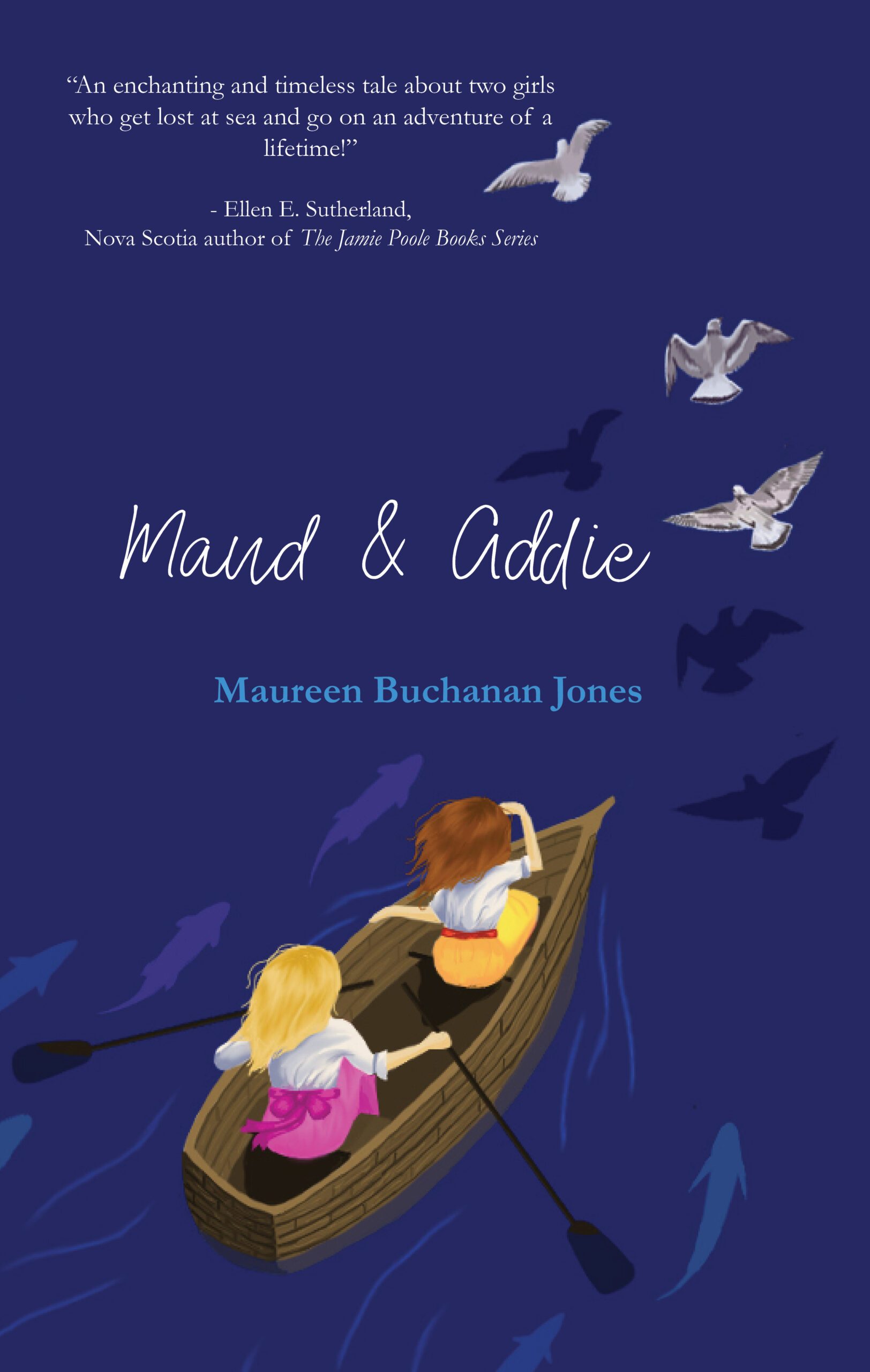
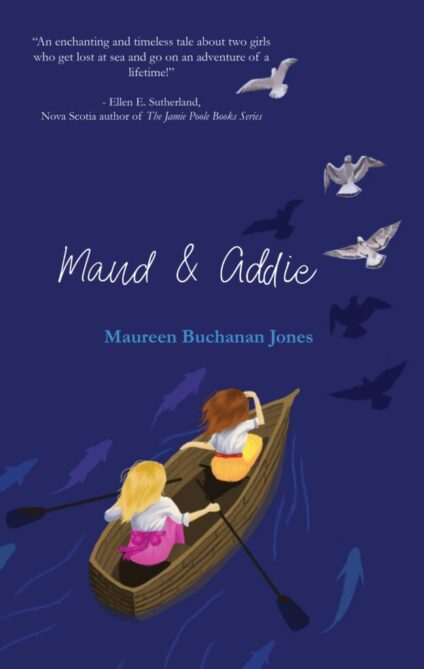
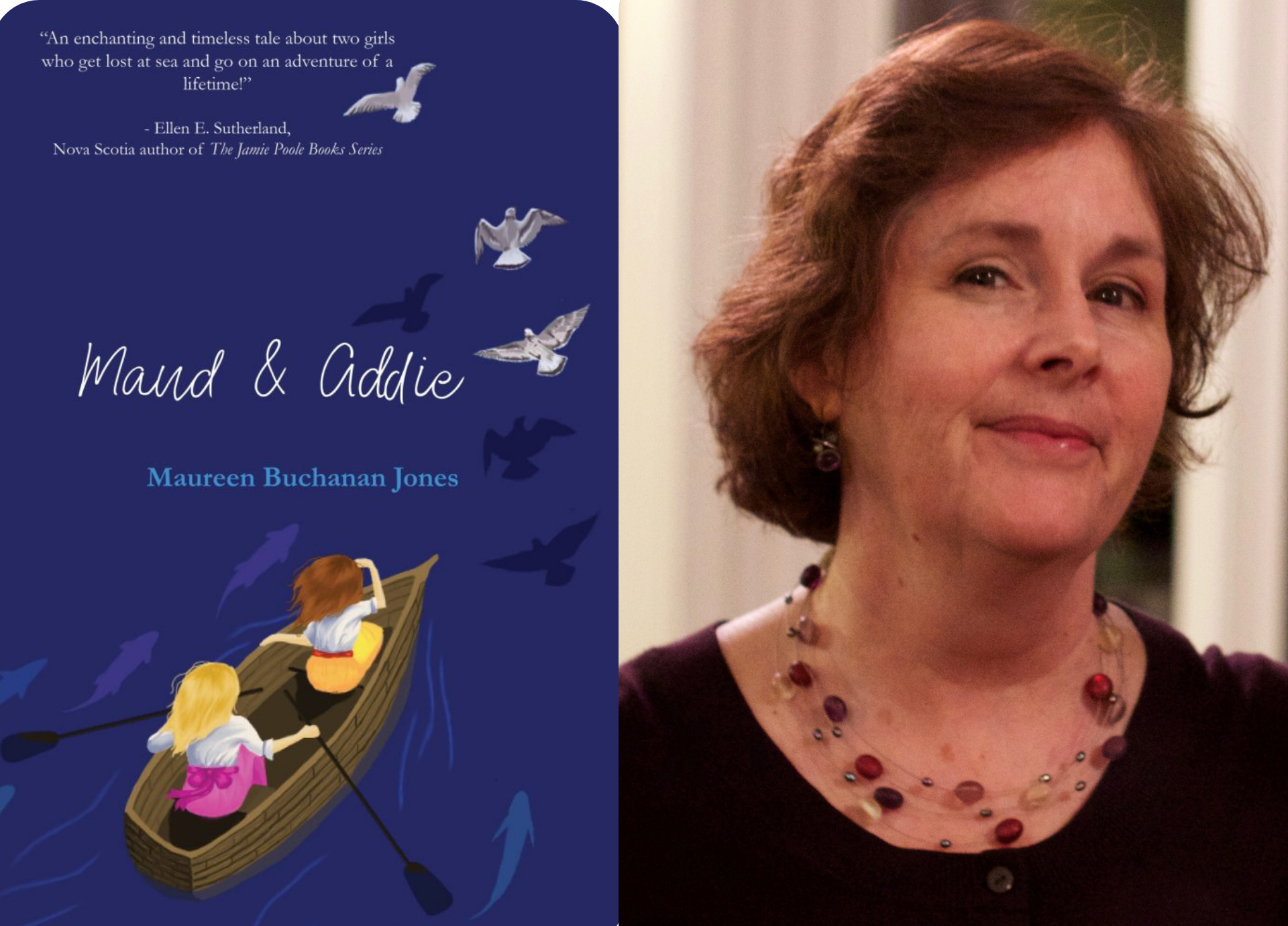
Maud & Addie “Sure to enchant, Maud & Addie is a touching novel complete with old skeletons, new friends, and the unbreakable bonds of sisterhood.” Vivian Turnbull, Foreword Reviews. To purchase: https://regalhousepublishing.com/product/maud-and-addie/
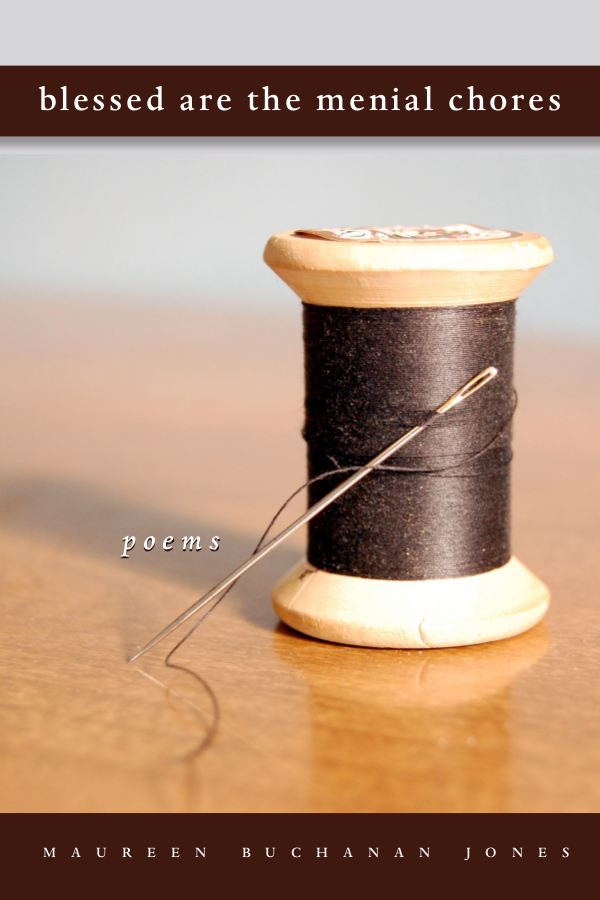
blessed are the menial chores “Should anyone ask what poetry is, hand them a copy of this book.” Sue Brannan Walker, poet laureate of Alabama 2003 – 2012. Purchase here: https://www.writingfulltilt.com/author/

Upcoming Events

Weekly Writing Workshops

I offer a free-range writing experience based in respect, serious exploration and a sense of play. Each workshop includes a variety of voices and an opportunity to share a manuscript with the group.

This eight-week session is $360 Contact: maureen@maureenbjones.com

Monday Evenings: 6:30 a.m. – 9:00 p.m. EST January 16th – March 6th

Prompt Photo

Posted in Uncategorized | Comments Off on Listening for the Light

Disparaging What We Create

We ask ourselves and each other this season what makes us feel grateful. We are told It is better to give than receive. So why then, do I hear so often a kind of grudging appreciation for or a disbelief in one’s own gift of writing? Is it because we need so little in order to do it? Is it because so many of us believe we are not really doing it at all? Or not doing it correctly? Or is it because so many writers tell us that writing should be painful and difficult?

I’m going to offer a kind of blessing or meditation, if you will, on accepting the gift that is writing.

Writing allows me to:

See inordinate humanity through characters

Open to the details that construct the universe

Enter times and places not physically possible

Let go of the static that clouds and drains the mind and spirit

Examine difficulties like turning a prism

Join a community of fellow writers

See and hear a true voice

Play with created beings who surprise

Grieve with birds and oceans and stones

Separate the inconsequential from the necessary

Fall in love with an ant

Rain fury on a bully, an invader, a scourge

Recognize the genius of unexpected phrases

Slow the onrush of fear or face it fully

Hold shadows up to the light

Drive everywhere and stay curled tight

Listen to animals speak, or silverware, or shoes

Call upon ancestors to say their truths

Remember everything even when there are gaps

Alter the atmosphere within

Change the fabric of stubborn beliefs

Calm the heartbeat and steady the sails

Offer fragility and honesty

Simply be

Come home. Always come home

What we create is of value for all these reasons and more. To write is to use the gift that allows us to be ourselves. Add to the list; create a new one; notice how your writing brings you to your truest self. This gift is yours to give and keep.

Publications

Maud & Addie “Sure to enchant, Maud & Addie is a touching novel complete with old skeletons, new friends, and the unbreakable bonds of sisterhood.” Vivian Turnbull, Foreword Reviews. To purchase: https://regalhousepublishing.com/product/maud-and-addie/

blessed are the menial chores “Should anyone ask what poetry is, hand them a copy of this book.” Sue Brannan Walker, poet laureate of Alabama 2003 – 2012. Purchase here: https://www.writingfulltilt.com/author/

Upcoming Events

Weekly Writing Workshops

I offer a free-range writing experience based in respect, serious exploration and a sense of play. Each workshop includes a variety of voices and an opportunity to share a manuscript with the group. The ten-week sessions are $500 Contact: maureen@maureenbjones.com

Tuesday Mornings: 9:30 a.m. – 12:30 p.m. EST November 29th – February 14th

Friday Mornings: 9:30 a.m. – 12:30 p.m. EST December 2nd – February 17th

Prompt Photo

Posted in Uncategorized | Comments Off on Disparaging What We Create

Characteristics vs. Characters

When I was in high school, one of the best surprises was to come home and find my mother’s friend, Sophia, sitting on the couch, smoking cigarettes, and gossiping in a throaty voice, her high heels kicked off and her lipstick leaving kisses on her coffee cup. Sophia was a writer’s dream. She was a bit shocking and laughed from deep in her chest. I was riveted. She was, literally, a character. But she was also a lesson on characters. What made her dress the way she did? Why did even her light-hearted comments contain a bit of sharp wire? What exactly made this woman tick? Sophia spoke to me with respect, but I was soon dismissed by my mother who knew how strange her conversations with Sophia could become. Reluctantly I went off to do homework, but I harbored all my observations about Sophia.

Fictional characters are the same, they arrive, and we writers are not teenagers easily shooed away. Lots of great books on writing techniques offer strategies for developing a character. These techniques include making a list of what a character has in their pockets or glove compartment; what they eat for breakfast; their favorite color; what keeps them up at night; whether they went to the prom, and if they did, what did they wear? All great questions that can result in vivid and useable answers. But it’s a bit like cataloging ingredients rather than tasting the cake. Spending time with Sophia was delicious.

Our characters need to surprise us, just as Sophia did one day when I arrived home and found her weeping on the couch. A fearless woman, Sophia cared little for other’s reactions. Being fourteen, I only got the broad strokes, but Sophia had ‘legal troubles’ which I later learned meant she had been arrested for shoplifting. It’s fine to not know everything about our characters. Their mysteries offer philosophical questions. If Sophia was a character in a novel, I would ask for her side of the story. I would let her give it to me evasively, defiantly, shamefully or fiercely. I would accept her lies and her truths, because all of it tells me who she is. So, take a pie to your character’s house, meet them at a coffee shop, walk up to them at the copy machine at work, or ask them a question at the school open house. And keep asking yourself: What is going on here? How did this happen? Why would they do that? You will and you won’t get straight answers. Write both.

Have a question about writing that you would like to have answered in the newsletter? Send me an email with “Newsletter Question” in the subject line. I will choose questions that best suit the writing community: maureen@maureenbjones.com

Publications

Maud & Addie “Sure to enchant, Maud & Addie is a touching novel complete with old skeletons, new friends, and the unbreakable bonds of sisterhood.” Vivian Turnbull, Foreword Reviews. To purchase: https://regalhousepublishing.com/product/maud-and-addie/

blessed are the menial chores “Should anyone ask what poetry is, hand them a copy of this book.” Sue Brannan Walker, poet laureate of Alabama 2003 – 2012. Purchase here: https://www.writingfulltilt.com/author/

Upcoming Events

Weekly Writing Workshops

I offer a free-range writing experience based in respect, serious exploration and a sense of play. Each workshop includes a variety of voices and an opportunity to share a manuscript with the group. The ten-week sessions are $500 Contact: maureen@maureenbjones.com

Tuesday Mornings: 9:30 a.m. – 12:30 p.m. EST November 29th – February 14th

Friday Mornings: 9:30 a.m. – 12:30 p.m. EST December 2nd – February 17th

Prompt Photo

Posted in Uncategorized | Comments Off on Characteristics vs. Characters

The Why of Toothpicks

As writers, we look for meaning in just about everything. Our lives are woven with metaphors and significance, often in objects, random images, or bits of conversation. We wonder what’s underneath the surface, and, because we are writers, we ponder and wrestle to make something of it.

Years ago, I searched for toothpicks in the supermarket, which I thought was a logical place to find them. I looked in the baking aisle because people use toothpicks to test a cake. No toothpicks. I looked in the vegetable section, thinking people use toothpicks to hold canapés together. Nope. I checked the section for drink mixers picturing olives in martinis. No dice. I went to the hardware aisle remembering my father using toothpicks for shims or breaking them into small bits as filler in furniture repairs. Nothing. I wasn’t particularly frustrated, because I do like the thrill of the hunt, but I was increasingly puzzled. The lure of the search and discovery is another fine trait we writers share. But I had limited time, so I broke down and asked a store clerk. Now, asking for help is not only a reasonable part of any research, it can also lead to rich and unexpected interactions. The clerk led me to household cleaning products and pointed to the top shelf. Next to the row of bottles and cans of furniture polish were the toothpicks. I was baffled. “Why are they here,” I asked. The clerk looked at me as though I was rather dim, and said, “Because they’re wood.”

I have considered that answer for years. First of all, it is downright poetic and a gift at the end of my determined exploration. I continue to find those words incredibly funny and satisfying. The why of where toothpicks should be stored is a question leading to the profoundly infinite logic we humans use to act out our lives. I also realized that an adventure contains a likely surprise if we let it find us. But I think my favorite meaning is that even a toothpick can lead us deeply into ourselves and an understanding of others. “He who has a why to live can bear with almost any how.” Friedrich Nietzsche

Upcoming Events

Open Spots in Weekly Writing Workshops:

These three-hour workshops offer the belief that every writer is developing their craft, that respect is the foundation of all artistic support, and that each session is a time for serious and playful exploration and experimentation. Workshops include the opportunity for a manuscript review. Please join me! maureen@maureenbjones.com

Tuesday Mornings 9:30 – 12:30 EDT Online September 13 – November 15, 2022

Friday Mornings 9:30 – 12:30 EDT Online September 16 – November 18, 20222

Photo Prompt

Posted in Uncategorized | Comments Off on The Why of Toothpicks

Everything Has Two Endings

I have been refurbishing my kitchen cabinets. No small feat, given they were built by hand in the 1940s by someone who apparently enjoyed eyeballing the measurements. One of the issues was the top facings that attach to the ceiling. For some reason the ends of these structures were not closed off.

Simultaneously, I have been teaching a flash fiction course to high school students. They were struggling with their endings. “Don’t we all?” I said, to which I received blank looks. I suggested that endings are over-rated. But most readers need some sense of landing or further direction.

The cats in my house love the open-ended nature of the empty cabinets. They had free range in the upper levels of the shelving, leaping from one gap to the next. The students, however, wanted better resolution. We all got back to work.

To solve my cabinet problem, I went to the hardware store and, without the proper vocabulary, described my problem. A solemn man in suspenders listened without blinking then said, “Soffits.” I said yes, knowing we weren’t talking about exactly the same thing, but did have the same concept. Endings are tricky like that: How to close off a running leap, a character on a trajectory. The answer is to not close off the story completely or maybe offer surprise. When the students read their endings, they all had breathing room, a bit of ventilation for the reader to consider. My cabinet ‘soffits’ are not airtight either. Their endings leave just a bit of mystery for the cats.

Upcoming Events

Maud & Addie has been selected by the Children’s Book Council for inclusion in their upcoming Kids Choice Awards! If you know any kids who love to read adventure tales, please pass the word! Voting is open until August 22nd. Only kids can vote!

Photo Prompt

Dryocampa rubicunda
Posted in Uncategorized | Comments Off on Everything Has Two Endings

Narrow Conversations

Narrow Conversations

When I was in college, a journalism professor gave an assignment to keep a journal. Not a radical idea, but the further instructions were to choose one subject and keep to it throughout the semester. The professor gave us her own example of living in China on a year-long assignment, during which her father died. She couldn’t go home, couldn’t be with her family, couldn’t share her grief with anyone. So she kept a journal for one year in which every day she wrote something about her father. It was her only way to honor him, grieve him, and keep him close. We students, of course, could choose any topic. I was surprised to find the limitation of one subject to be very reassuring. It was doable. My empty page did not have to, should not, include the universe. The journal pages became small, strong structures that held me to a focus and let me run crazy within the page dimensions. This is the function of form, whether in poetry or prose. Experimentation with form is always invited, and relinquishing ourselves to boundaries can allow a different kind of independence.

But over the years I forgot this lesson. Even as I offer form in my own workshops, I often feel clumsy and inept in the face of a sonnet or the strictures of flash fiction. And then my dear friend, Jan Haag, who leads writing workshops in Sacramento, offered a 30-day version of my professor’s assignment. Every day, four lines. No need for more. Now, my friend did not specify that it had to be one subject, but I chose to combine the original journal keeping idea with this current journey. I decided to have a conversation with a very important person in my life. The four lines became a support or scaffolding, not a restriction. They became a conversation the You and I could finally have. As a result, 30, four-line poems express aspects of my chosen subject. And the thing about this way of writing is that it becomes a meditation, a tight lens, and a close examination of someone’s way of speaking, the way they licked their spoon, the thickness of their hair, the bitterness or joy as they walked away or toward, or the way they pointed to a red winged blackbird and said, ‘Summer will come again.’

Upcoming Events

Maud & Addie remains a finalist, no gold, silver or bronze in the Foreword Reviews best juvenile fiction awards. Thank you for your crossed fingers! The books that did win are beautiful creations: The Beatryce Prophecy, Tiger Skin Rug, and Oddity. I am proud to be in such company!

This summer I will be teaching a Flash Fiction course for high school students at Smith College. After which, I just might give myself time to work on the second Maud & Addie book as well as my adult novel Slide Show.

Prompt Photo

Posted in Uncategorized | Comments Off on Narrow Conversations

Raking the Forest Floor

I was raking the leaves yesterday, clearing away the decayed vestiges of last year’s foliage even as this year’s leaves flaunt their newly minted green. The idea of a tidy forest floor is actually an oxymoron. No one rakes in the woods. And, as usually happens when my hands are occupied with a physical task, my mind went on its merry way somewhere else. I was imagining the decomposition of the leaves, and the busy activity that happens underground, connection upon connection, and the phrase “Mycorrhizal fungi mutualism” surfaced. A subterranean world came alive with a vast network of connections multiplying into the gazillions. Connections, information, sustenance, and mutual assistance for survival. So busy! So purposeful! And so dependably trusting. Even in a one-liter potted houseplant, one kilometer of these fine fungal filaments can be present to assist the plant’s growth with access to water and nutrients. What on earth (pun intended) does this have to do with writing? I think our brains are like the Mycorrhizal fungi if we allow them to be. We have been taught to make sense, which is necessary for survival. We need to communicate our need for food, safety, warmth, shelter, comfort. We need to be clear and direct to manage healthy relationships. But in our creative minds we need a vast organism that willingly, trustingly, makes connections out of random bits of knowledge, experience and sensations when we first begin to write. Knowing exactly where we’re going takes the fun out of tunneling, surfacing, and tunneling more. Our memories and our imaginations work in tandem. They, like mycorrhizal fungi and most of earth’s plants, have a mutualism that forms the foundation of creative inspiration. Building connections and free associations is how we make meaning, which is an organic cousin to making sense. Creating a metaphor requires going deep, letting the detritus and debris become fertile. By roaming and excavating, committing to the deep nutrients of our imaginations and memories we invite vibrancy and a living, green voice to our pages. We are sprung from within.

Upcoming Events

Winners for the Foreword Review Best Books of 2021 to be announced in June

Maud & Addie is a finalist for Middle Grade Books! Stay tuned for news and keep your fingers crossed!!

Prompt Photo

Posted in Uncategorized | Comments Off on Raking the Forest Floor

Poetry makes nothing happen

In this extraordinary moment when we are gathering ourselves up from the years of a pandemic, a war is now ravaging Ukraine and, like all wars, the world beyond. April is poetry month. What can a poet say? As poets, we are also listeners to other voices. Right now, is the time to listen as well as write. I invite all of us to turn our attention to the poetic voices of Ukraine and Russia who know the deep roots of imperial travesty. They have everything to say and have been saying it for centuries. Take time to find one or two of these voices and read what they are telling us. Honor them by taking in their words. This article on Literary Hub focuses on the work of Ukranian poet, Halyna Kruk, a voice that speaks about and against the aggressions toward Ukraine. Her voice is a perfect place to start.

https://lithub.com/war-shortens-the-distance-from-person-to-person-from-birth-to-death-new-work-by-ukrainian-poet-halyna-kruk/

The Russian poet, Polina Barskova quotes W.H. Auden: poetry makes nothing happen, and then she continues, saying, “we’ve been wondering ever since — are we so impotent, so powerless? Poetry cannot shoot, cannot heal, cannot abolish death. Poetry’s jobs are minor: to comfort a mourner, a lover, for a brief moment. Elegy, one of the earliest forms of poetry, was born as funeral song. As I see it now, the job of consolation is crucial, the job of giving medicine — even if it cannot bring anybody back to life, it can patch the texture of life as it is, make it softer, warmer. Damn it, make it prettier.”

Ukrainian Poets: Serhiy Zhadan, Halyna Kruk, Illy Kaminsky, Oksana Zabuzhko, Ilya Kiva, Kateryna Kalytko, Vasyl Holoborodko, Yurii Andrukhovy, Iryna Shuvalova, Natalka Bilotserkivets, Ihor Pavlyuk, Moysey Fishbein, Liudmyla Skyrda, Hanna Yablonska, Iryna Senyk, Lyubov Sirota, Myroslav Laiuk, Anastasia Afanasieva, Anna Bagriana,

Russian Poets: Anna Akhmatova,  Marina Tsvetaeva, Bella Akhmadulina, Vera Polozkova, Elena Fanilova, Maria Stepanova

No war                       by Halyna Kruk

my love language has broken teeth
spit, you say, spit ‘em all out, spit ‘em quick!
you’ll get straighter ones.
with a better bite.

my love language is a wreck,
avoid this thicket, it’s mine upon mine, a tangle of tripwires,
you never know what a word really means,
which memory you can touch, which will detonate.

we planted this hedge so no one would get hit,
hung caution signs to warn the others
of death disguised as a pretty view

but you just offer to remove them so nothing
ruins the picture, not waiting for the sappers,
not clearing the empty terrain of thorns.

my love language is heavy as a father’s gaze,
immovable as the eyelids upon his son’s coffin,
which they used all week to steady their guns,
my love language is choking on its words like his mother

I held it close when I was crying and to stop crying,
I held it close. I knotted it like a camouflage net,
color coordinated with the season, so it could
hide someone.

you say don’t get mad. be wiser. take the high road.
tame your love language. push it out. purge yourself of it.
plant a flower in this scorched land.
in this empty place in the language and in you

you must have saved a few flower seeds.
you must have saved a kind word someplace.
someplace in your soul, that will forgive everything

my love language has grown so big
that my tongue comes out with it,
and my soul come out
with this soulless language.

Translated from the Ukrainian by Amelia Glaser and Yuliya Ilchuk.

Upcoming Events

Weekly Workshops

Monday Evenings 6:30 – 9:00 p.m. EDT, May 23 – 20 $200

Tuesday Mornings 9:30 a.m. – 12:30 p.m. EDT, May 24 – 21 $250

Writers with all levels of experience welcome. Each workshop is a place to build and loosen your creative muscles! For more information: maureen@maureenbjones.com

Prompt Photo

Posted in Uncategorized | Comments Off on Poetry makes nothing happen

Finders Keepers

Holding on is the work of this day. We are all trying to keep track, stay steady, manage our everything. And then we spill something, arrive late, can’t remember. The pandemic, the war, the social rifts we struggle to process are all taxing our brains and spirits. And then we lose our notebook, or the computer swallows the file. And that file, that notebook contain our hearts and our poems, our characters and our creative dreams. The word lost means so much more now, and it always meant more than we could stand already. How do we grab back what slipped from our fingers? How do we step back into those words?

Several weeks ago, my glasses broke into several small pieces in my hands. Like everyone who needs glasses, an instant vulnerability arrived along with panic. I need to see. I brought my poor, wounded spectacles to the local eye shop and presented them to a man with an outstretched hand. “Yes,” he said. “Please sit for a moment.” I thought he was being polite, certain that he would return instantly and tell me that the glasses were hopeless. I spent the next few minutes rapidly going through my finances to figure out how I would afford a new pair. The man came from the back room and handed me my glasses. Repaired. Fixed. Better than new. I tried not to embarrass him and me by crying, saying thank you a dozen times. He gently said, “Not at all. Happy to help.” My next stop was the grocery store, and as I put necessaries into my cart, I thought, “Thank you isn’t enough. I can see!” I bought a chocolate marble Bundt cake and a bag of honey crisp apples, returned to the eye shop and offered them as gratitude. The man put his hands together and bowed slightly, then spread his arms and said, “You have made us all so happy!” We both laughed, and again I tried not to cry. Loss and recovery. Vulnerability and restoration.

When we lose our writing, it is devastating. We are flung into a blank landscape without solid footing. We grope and despair. But there is a guide to help us back to our stories and poems. It’s a bit like the man going into the back room. Set everything else aside and sit quietly, perhaps with eyes closed. Let your mind settle and then let it wander. This is the same as remembering a vivid dream. Nothing has gone away; it’s all still there in that back room. As you wander, you’ll begin to notice parts of what you lost: a bit of description, a line or two of dialogue; the rhythm of the language, emotion and tone, or an image that held the essence of what you want to say. You will gather up enough, more than enough to piece together what you lost. It won’t be exactly the same, but it will be close, and, like the glasses, perhaps the next, improved draft of what you had originally written.  “The strands are all there; to the memory nothing is ever lost.” Eudora Welty.

Events

Writing Workshop Tuesday Mornings are Back! There are still open spots: three hours each week that will lift you up and settle your nerves. March 15 – May 17, 2022. 9:30 a.m. – 12:30 p.m. EST. Each writer will have the opportunity to bring in a manuscript for peer review using the AWA Method. $500/prorated. maureen@maureenbjones.com

Maud & Addie is a finalist in the Indie Awards Book of the Year contest sponsored by Foreword Reviews!

Prompt Photo

Painting by Gordon K. Grant. Currently at the Ventura CA Post Office

Posted in Uncategorized | Comments Off on Finders Keepers

Arrivederci Compari

Beginning a novel is like the start of a romance with the spark and daydreams we enter, and a world newly created. Middles are like creating our own maps, the kind early explorers made who half believed they might fall off the page if they sailed too far, but they tried anyway. And then there are endings, and those can be tough. We fall in love with our characters, become seriously involved in all their business and sometimes find them more comforting than the realities where we actually exist. Why would we want to leave them? Why would we want to say good-bye?

Writing that last chapter, that last scene is like standing on the station platform and watching a dear friend’s face getting smaller, then blur, then vanish as the train pulls away. And that feeling of being left behind is lonely. Or the reverse, where we are the ones getting up from the café table and leaving our interior writing companion still sitting with a half cup of tea and bits of scone on a plate. It’s abandonment either way. Loss is loss and why wouldn’t we let the end languish, so the last chapter remains undone, an open door?

But that doesn’t really work. That’s neglect and pulls at us just as strongly. And we know we are letting ourselves down. We want an ending that measures up to everything that has gone before. Which can feel like a hefty ask. The place to start is back at the beginning. Read your own novel as if you have pulled it off a library shelf. Read it the way you read all the other novels you stack beside your bed. Let the story carry you and let the voices lead you through the action and emotional rhythms. Make notes if you must but try to be inside the book to feel its atmosphere and flavor. It is heading in a direction; it has a current. Follow it and believe in where that current points you when you get to the last page you have written. You will have a much better idea of how to complete the work. You can also, before or after using the previous strategy, ask the characters what they would like to do. Not one of them is going to say, “Leave me in limbo, please!” Go back to the café, the fishing pier, the factory floor, the horse coral and watch them, talk to them. Then ask them what more they would like to say. Let them be honest. Let them tell you what they know they are going to do and let them tell you they’re going to be ok.            

Give them a send-off they deserve. They have given you a full adventure, and plenty of rich escape. After the last line is done, put on the kettle or walk along a stream and think of them in their world, continuing on by themselves. You have given them the skills and backstory to do it. Letting them go isn’t really saying good-bye. You can visit them in your own pages, and maybe, who knows, somewhere in the future, you may open a blank page and there they will be, waiting, thumb out for another ride on your pen.

Events

Tuesday Mornings are Back! Join me for ten weeks of writing and three hours each week that will lift you up and settle your nerves. March 15 – May 17, 2022. 9:30 a.m. – 12:30 p.m. EST. Each writer will have the opportunity to bring in a manuscript for peer review using the AWA Method. $500 maureen@maureenbjones.com

Thank You Book Moon & Odyssey Bookshop!

Prompt Photo

Posted in Uncategorized | Comments Off on Arrivederci Compari