Someone once asked me: “Why write this?” They were pointing to a copy of a poem I had offered for review by the workshop. I froze. The question was a wall I could not surmount. As I drove home, I began to tunnel under it. Why do any of us write anything? A foggy slice of moon smirked at me. I told the moon: I don’t know! I just wrote it. But that was dodging the point. Under the klieg-light examination of the workshop the poem had warped and gone limp. Perhaps my writing had no business being let loose in the world. And that’s what we do, isn’t it, when someone intimates that they know what should or should not be created. We shut down the mysterious internal foundry that transmutes thought, emotion, experience into art. We let the fire go out and tell ourselves: I’m not a writer. The problem is the fire doesn’t really go out. We are poets and storytellers from the first sounds we utter. How could we not know how to express our essential self? But it takes answering that challenging question, and it takes practice to find confidence. It takes experimenting with our own words and reading and listening to others’. It was years later that I came upon Ranier Marie Rilke’s Letters to a Young Poet in which he writes:
I cannot discuss your verses, for any attempt at criticism would be foreign to me. Nothing touches a work of art so little as words of criticism: they always result in more or less fortunate misunderstandings. Things aren’t all so tangible and sayable as people would usually have us believe, most experiences are unsayable, they happen in a space that no word has ever entered, and more unsayable than all other things are works of art, those mysterious existences, whose life endures beside our own small, transitory life. . . . A work of art is good if it has arisen out of necessity. That is the only way one can judge it.
Perhaps my fellow writer in that long ago workshop was trying to ask what Rilke so elegantly said. But like so many responses to created work, these ‘less fortunate misunderstandings’ are actually a learned formula of believing there is a narrow definition of worthy art. You may return to your tunnel from time to time. But it will reach daylight, and it is just as rich, varied, and articulate in its sheltered quiet as when it feels the wind in its voice.
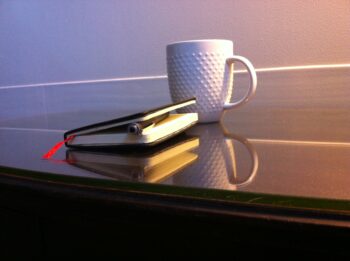
Prompt Photo